Many women experience repeated miscarriages without understanding the real reason behind pregnancy loss. One common but often undiagnosed condition is a uterine septum, also called a septate uterus or divided uterus. This condition develops before birth when the uterus does not form completely during fetal development.
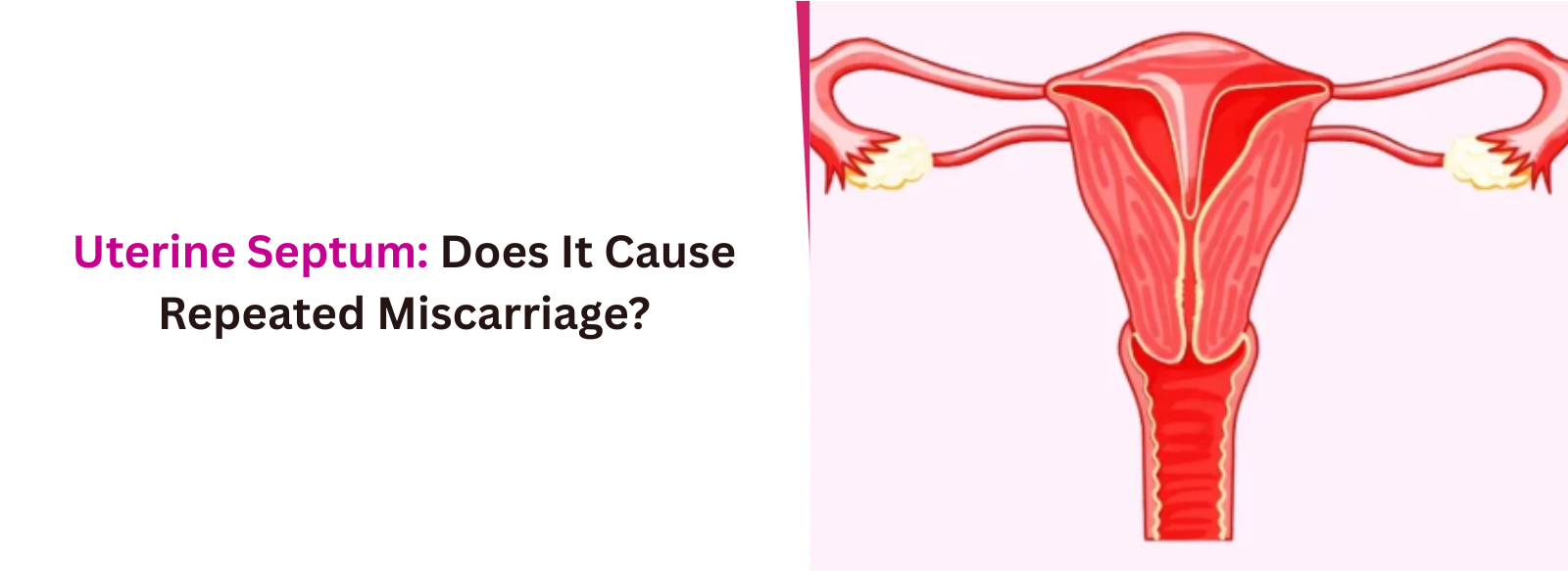
A uterine septum creates a tissue wall inside the uterus, dividing the uterine cavity into two parts. Because of this, many people also search for terms like split uterus, septum uterus, or subseptate uterus. In many women, the condition causes no symptoms and is discovered only after fertility problems or repeated miscarriages.
Understanding uterine septum causes, symptoms, diagnosis, and treatment can help improve fertility and pregnancy success rates.
What is a Uterine Septum?
A uterine septum is a congenital uterine abnormality where a thin wall of tissue divides the inside of the uterus. This condition is commonly known as:
Septate uterus
Split uterus
Divided uterus
Septum uterus
The condition occurs when the Müllerian ducts do not fuse properly during fetal growth. As a result, a partition remains inside the uterus.
Some women may have a complete septate uterus, while others may have a smaller subseptate uterus. Both conditions can affect fertility and pregnancy outcomes depending on the size of the septum.
Septate Uterus Symptoms in Women
Many women with a septate uterus do not experience noticeable symptoms. The condition is often discovered during fertility investigations or miscarriage evaluation.
Common Uterine Septum Symptoms Include:
Repeated miscarriage
Difficulty conceiving naturally
Infertility
Painful menstruation
Pelvic discomfort
Pregnancy complications
Repeated IVF failure
Preterm labor
Because symptoms are often mild, the condition may remain undiagnosed for years.
Uterine Septum Causes
A uterine septum is present from birth and develops during fetal growth.
Main Uterine Septum Causes
During pregnancy, the uterus forms from two Müllerian ducts. Normally, these ducts fuse completely to create a single uterine cavity. When fusion remains incomplete, a septum forms inside the uterus.
This creates:
Septate uterus
Subseptate uterus
Divided uterus
The condition is congenital and is not caused by diet, lifestyle, or infections later in life.
Uterine Septum and Miscarriage
Yes, uterine septum and miscarriage are strongly connected. The septum has poor blood supply, making implantation weak and unstable.
If the embryo implants on the septum tissue, pregnancy may not grow properly, leading to early miscarriage.
Why Septate Uterus Causes Miscarriage
Poor blood flow to embryo
Reduced implantation support
Less space inside uterus
Higher pregnancy complications
Many women discover the condition only after experiencing repeated miscarriages.
Can You Get Pregnant Naturally With a Septate Uterus?
Yes, many women can conceive naturally with a septate uterus. However, the risk of miscarriage and pregnancy complications may remain higher.
Some women carry healthy pregnancies without treatment, while others may require surgery to improve implantation and pregnancy success.
Complications of Septate Uterus During Pregnancy
A split uterus or uterine septum may increase the chances of:
Early miscarriage
Recurrent pregnancy loss
Preterm birth
Breech baby position
Fetal growth restriction
High-risk pregnancy
Difficulty carrying pregnancy full-term
Early diagnosis and treatment can significantly improve outcomes.
Difference Between Septate Uterus and Bicornuate Uterus
Many people confuse septate uterus with bicornuate uterus, but both are different conditions.
Bicornuate Uterus Meaning
A bicornuate uterus is a heart-shaped uterus caused by incomplete outer uterine fusion.
Difference Between Septate Uterus & Bicornuate Uterus
Septate Uterus | Bicornuate Uterus |
Tissue divides inside uterus | Outer uterus becomes heart-shaped |
Normal outer uterine shape | Abnormal outer contour |
Treated with hysteroscopic surgery | Different treatment approach |
3D ultrasound and MRI help doctors identify the correct condition.
How is Uterine Septum Diagnosed?
A uterine septum can sometimes be missed on normal scans. Advanced imaging provides better diagnosis.
Diagnostic Tests Include:
Pelvic Ultrasound
Basic scan to identify uterine abnormalities.
3D Ultrasound
Provides detailed imaging of the uterine cavity.
Hysteroscopy
A small camera is inserted inside the uterus to directly visualize the septum.
MRI Scan
Used in selected cases for detailed mapping.
Accurate diagnosis helps prevent repeated miscarriage and supports proper treatment planning.
Subseptate Uterus Treatment & Uterine Septum Surgery
The most effective subseptate uterus treatment is hysteroscopic septum resection.
This minimally invasive surgery removes the tissue dividing the uterus and creates a healthier uterine cavity.
Hysteroscopic Septum Resection
During surgery:
A hysteroscope is inserted into the uterus
The septum tissue is carefully removed
The uterine cavity is reshaped
Benefits of Surgery
Reduces miscarriage risk
Improves fertility
Supports healthy implantation
Improves IVF success
Increases chances of full-term pregnancy
Recovery is usually quick with minimal discomfort.
Can a Uterine Septum Grow Back?
One of the most searched questions is: “Can a uterine septum grow back?”
In most cases, no. After hysteroscopic surgery, the septum usually does not return. The uterine cavity remains normal permanently.
Rarely, thin scar tissue or adhesions may develop, but these can be treated easily.
Can a Uterine Septum Affect IVF Success?
Yes, uterine septum can affect IVF success because embryos require healthy tissue and good blood supply for implantation.
When implantation occurs on septum tissue:
IVF implantation may fail
Pregnancy loss risk increases
Many fertility specialists recommend correcting the septum before IVF treatment to improve success rates.
When Should You See a Doctor?
You should consult a fertility specialist if you have:
Two or more miscarriages
Difficulty conceiving
Failed IVF cycles
Painful periods
Preterm pregnancy history
Known uterine abnormality
Early treatment improves fertility and pregnancy outcomes.
Frequently Asked Questions
What is a septate uterus?
A septate uterus is a condition where tissue divides the inside of the uterus into two sections.
Is split uterus dangerous during pregnancy?
Yes, it may increase the risk of miscarriage and pregnancy complications.
Can a uterine septum grow back after surgery?
Usually no, the septum does not return after proper hysteroscopic surgery.
What is subseptate uterus treatment?
Hysteroscopic septum resection is the most effective treatment.
What is bicornuate uterus meaning?
A bicornuate uterus is a heart-shaped uterine abnormality different from a septate uterus.
Visit Vardaan IVF Center for Repeated Miscarriage Treatment
Vardaan Medical Center offers advanced fertility care and specialized treatment for women facing infertility, recurrent miscarriage, septate uterus, and uterine abnormalities.
The experienced fertility specialists provide:
IVF treatment
ICSI treatment
IUI procedures
Recurrent miscarriage treatment
Hysteroscopic septum surgery
Fertility evaluation and diagnosis
With expert fertility care in Jalandhar and Amritsar, women receive safe, personalized, and advanced treatment for healthy pregnancy outcomes.