
Answer is “Day 5 Embryo Transfer Usually Has A Higher Success Rate Per Embryo, But Day 3 Transfer Can Be Better Depending On Your Fertility Profile.”
If you’re undergoing IVF (In Vitro Fertilization), this is one of the most common and confusing decisions. Both Day 3 and Day 5 embryo transfers are scientifically proven and widely used. Day 5 (blastocyst) transfer allows better embryo selection and often higher implantation rates, while Day 3 transfer may suit patients with fewer embryos or specific medical factors. The right choice depends on age, embryo quality, and past IVF history.
What is an Embryo Transfer in IVF?
After eggs are retrieved and fertilized in the lab, the resulting embryos are cultured for a few days before being transferred into the uterus.
The timing of this embryo transfer in IVF defines whether it is
Day 3 embryo transfer (cleavage-stage embryo), or
Day 5 embryo transfer (blastocyst-stage embryo)
Both aim for the same goal: implantation and a healthy pregnancy. But they take different paths to get there.
Read Also: https://vardaanmedicalcenter.com/blog/embryo-transfer-process-success-tips-hindi-guide
What is Day 3 Embryo Transfer?
Day 3 embryo transfer involves placing the embryo into the uterus about 72 hours after fertilization, when it usually contains 6–8 cells. At this early developmental stage, the embryo has not yet reached the blastocyst phase, so long-term viability is harder to predict. After transfer, the uterus provides the natural environment needed for continued growth and further development of the embryo.
Day 3 Embryo Transfer Success Rates
Many patients searching for “Day 3 embryo transfer success rates” want to know whether early embryo transfer can still lead to successful pregnancy.
On average:
Day 3 implantation rate: 25–40%
Pregnancy success rate: 30–45%
Live birth rate: 25–40%
However, IVF success depends heavily on:
embryo grading
maternal age
sperm quality
uterine lining
IVF lab quality
previous IVF history
For women with fewer embryos, Day 3 transfer may sometimes provide better overall pregnancy chances than waiting until Day 5.
When is Day 3 Transfer Commonly Recommended?
Day 3 embryo transfer may be advised if:
You have fewer embryos available
You are of advanced maternal age
There is a history of poor embryo development
Previous IVF cycles failed to produce blastocysts
The clinic wants to reduce the risk of losing embryos in extended culture
For some patients, transferring embryos earlier can improve overall IVF outcomes.
What is Day 5 Embryo Transfer?
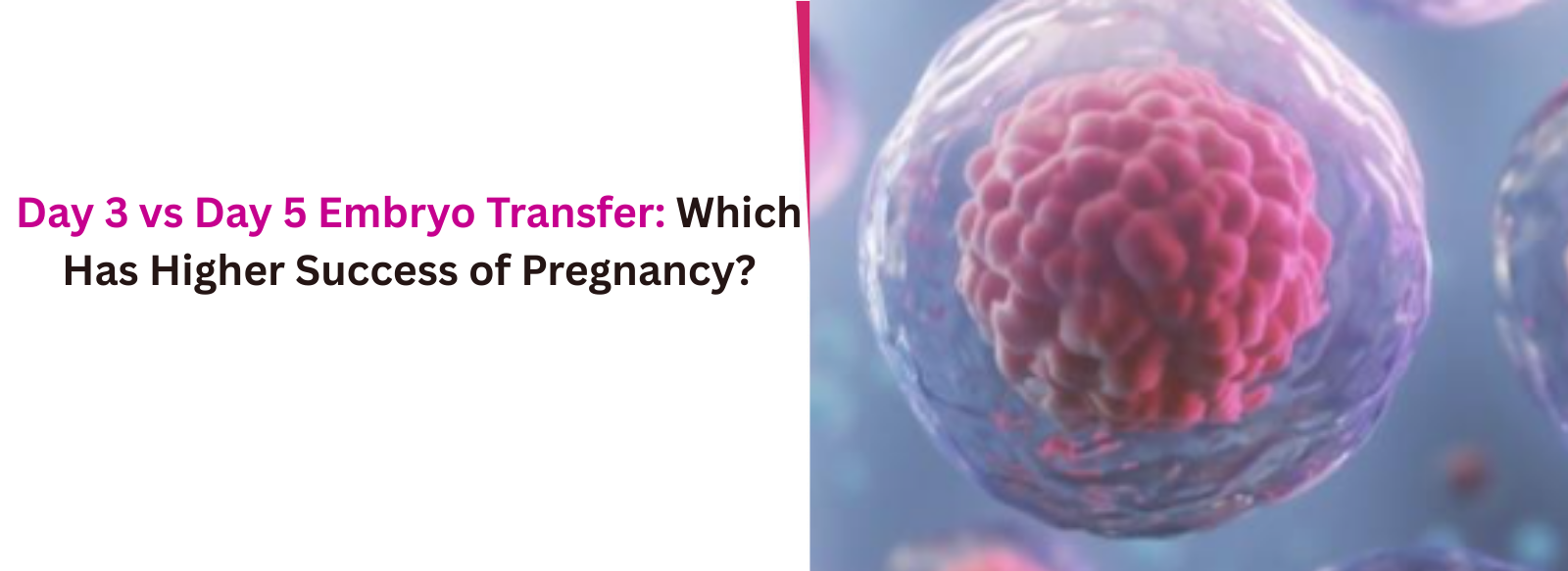
A Day 5 embryo transfer involves transferring a blastocyst-stage embryo that has developed for about five days after fertilization.
At this stage, the embryo usually contains around 100–150 cells and closely resembles natural embryo development inside the body.
Day 5 embryos are considered more advanced because:
embryo structures become clearly defined
stronger embryos naturally survive
implantation potential improves
synchronization with the uterine lining becomes better
This is why many IVF specialists prefer blastocyst transfer in suitable patients.
Day 5 Blastocyst Transfer Success Rates
Day 5 blastocyst embryos generally show higher implantation potential because weaker embryos often stop developing before reaching this stage.
Average Day 5 embryo transfer success rates include:
Implantation rate: 40–60%
Pregnancy rate: 45–65%
Live birth rate: 40–55%
Because of better embryo selection, Day 5 blastocyst transfer often results in higher pregnancy success per embryo transferred.
However, not every embryo survives until Day 5, which is why embryo count and patient fertility profile are extremely important before choosing this approach.
When is Day 5 Transfer Commonly Recommended?
Day 5 transfer may be advised if:
You have multiple good-quality embryos
You are a good ovarian responder
Preimplantation Genetic Testing (PGT) is planned
The clinic aims to reduce multiple pregnancy risk
When is Day 5 Transfer Commonly Recommended?
Day 5 transfer may be advised if:
You have multiple high-quality embryos
You are a good ovarian responder
Preimplantation Genetic Testing (PGT) is planned
The clinic aims to reduce multiple pregnancy risk
Previous IVF cycles showed good blastocyst development
Day 3 to Day 5 Embryo Survival Rate
One of the most searched IVF questions is:
“How many Day 3 embryos survive to Day 5?”
On average, around 40–60% of Day 3 embryos successfully develop into Day 5 blastocysts.
However, survival rates depend on:
embryo quality on Day 3
maternal age
egg quality
sperm health
IVF lab conditions
genetics of the embryo
Some embryos may stop growing before reaching the blastocyst stage.
This is why certain fertility specialists recommend transferring embryos earlier in selected patients rather than risking no transfer at all.
For women with limited embryos, Day 3 transfer may sometimes be safer than extended culture.
Day 3 vs Day 5 Embryo Transfer: Success Rate Comparison
Day 3 vs Day 5 Implantation Rate
Day 5 blastocyst transfer generally shows higher implantation rates compared to Day 3 embryos.
Average implantation rates:
Day 3 embryos: 25–40%
Day 5 blastocysts: 40–60%
This is mainly because stronger embryos survive longer and are naturally selected during extended culture.
Day 3 vs Day 5 Pregnancy Rate
Pregnancy rates per embryo transfer are often higher with Day 5 embryos.
Average pregnancy rates:
Day 3 transfer: 30–45%
Day 5 transfer: 45–65%
However, cumulative pregnancy rates over multiple IVF cycles may become similar depending on embryo availability and freezing strategies.
Day 3 vs Day 5 Live Birth Rate
Live birth rates are generally higher with Day 5 blastocyst transfers.
Average live birth rates:
Day 3 embryos: 25–40%
Day 5 blastocysts: 40–55%
Still, maternal age, embryo genetics, sperm quality, and uterine health remain major deciding factors.
Quick Comparison: Day 3 vs Day 5 Embryo Transfer
Factor | Day 3 Embryo Transfer | Day 5 Blastocyst Transfer |
Embryo Stage | 6–8 Cells | Blastocyst (100+ Cells) |
Implantation Rate | Lower | Higher |
Best For | Low embryo count | Multiple good embryos |
Lab Survival Risk | Lower | Higher |
Embryo Selection Accuracy | Moderate | Better |
Pregnancy Success Rate | Moderate | Higher per embryo |
Why Day 5 Embryo Transfer Often Shows Higher Success
There are several reasons why Day 5 blastocyst transfer is commonly associated with higher IVF success rates:
Natural Embryo Selection
Only embryos with stronger developmental potential survive until Day 5.
Better Uterine Synchronization
The uterus is naturally prepared to receive embryos around the blastocyst stage.
Higher Implantation Potential
Blastocysts are more developmentally advanced, increasing implantation chances.
Better for Single Embryo Transfer
Higher success per embryo reduces the need for multiple embryo transfer and lowers twin pregnancy risk.
Compatibility With Genetic Testing
PGT testing requires blastocyst-stage embryos.
When Day 3 Embryo Transfer May Be the Better Choice
Despite the popularity of blastocyst transfer, Day 3 embryo transfer remains extremely important in IVF treatment.
Advantages of Day 3 transfer include:
reduced risk of embryo arrest in the lab
earlier transfer into the natural uterine environment
useful for patients with fewer embryos
emotionally safer for some couples
lower risk of having no embryos left for transfer
For some patients, waiting until Day 5 may result in losing all embryos before transfer.
Does Age Affect the Choice Between Day 3 and Day 5?
Yes, maternal age significantly affects embryo development and IVF success.
Patients Under 35 Years
Younger patients usually produce stronger embryos, making Day 5 blastocyst transfer more beneficial because:
embryo survival rates are higher
blastocyst development is stronger
implantation potential improves
Patients Above 38 Years
For older patients:
embryo development may be slower
fewer embryos may survive until Day 5
Day 3 transfer may sometimes improve overall pregnancy chances
This is why embryo transfer timing should always be individualized.
What About Frozen Embryo Transfer (FET)?
With modern vitrification techniques, frozen embryo transfer (FET) has become extremely successful in IVF treatment.
Day 5 blastocysts generally tolerate freezing and thawing very well.
Benefits of frozen embryo transfer include:
improved uterine preparation
reduced hormonal stress
better implantation environment
flexibility in IVF planning
In many cases, frozen embryo transfer success rates are equal to or even better than fresh transfers.
So, Which is Better: Day 3 or Day 5 Embryo Transfer?
There is no single answer that fits every patient.
While Day 5 blastocyst transfer generally offers higher implantation and pregnancy rates, Day 3 transfer can sometimes provide safer and better outcomes for women with:
fewer embryos
advanced maternal age
low ovarian reserve
repeated IVF failures
poor embryo survival history
The best IVF outcomes happen when treatment is personalized according to your fertility profile.
Final Thoughts
When comparing Day 3 vs Day 5 embryo transfer, IVF success is not determined by statistics alone. It depends on personalized treatment planning. While Day 5 transfer may offer higher success per embryo, Day 3 transfer can be equally effective for certain patients. The right choice is the one that maximizes pregnancy chances, minimizes risks, and aligns with your medical history and emotional comfort. Always review embryo development, age, and previous IVF outcomes with your fertility specialist. In IVF, the most suitable approach often delivers the best results.
Facing IVF challenges or repeated embryo transfer failures? Vardaan Hospital is the best IVF center in Jalandhar and IVF clinic in Amritsar. We offer personalized fertility care.
Book Your Consultation with Vardaan IVF Specialists Today to ensure a healthy start for you and your baby.
FAQs
Is Day 5 embryo transfer more successful than Day 3?
In many IVF cases, Day 5 blastocyst transfer has higher implantation and pregnancy rates because stronger embryos survive longer in the lab. However, Day 3 transfer may be better for patients with fewer embryos or poor embryo development.
What is the survival rate from Day 3 to Day 5 embryos?
Approximately 40–60% of Day 3 embryos successfully develop into Day 5 blastocysts depending on embryo quality, maternal age, and IVF lab conditions.
Can Day 3 embryos become healthy pregnancies?
Yes. Many successful pregnancies and healthy births occur from Day 3 embryo transfers, especially in women with limited embryos or advanced maternal age.
Why do some IVF doctors prefer Day 3 transfer?
Some fertility specialists recommend Day 3 transfer to avoid embryo loss during extended culture and allow embryos to continue developing naturally inside the uterus.
Which embryo transfer is better for IVF success?
The best embryo transfer depends on embryo quality, maternal age, ovarian reserve, and IVF history. Day 5 transfer often gives higher success per embryo, while Day 3 transfer may reduce the risk of losing embryos in the lab.
Is Day 5 blastocyst transfer always better?
No. Although Day 5 blastocysts often show higher implantation rates, not every patient benefits from extended embryo culture. Some patients may achieve better outcomes with Day 3 transfer.